Scientific Education
What Are Peptides? What They Do and How They Differ from Proteins
By Jason White · Published
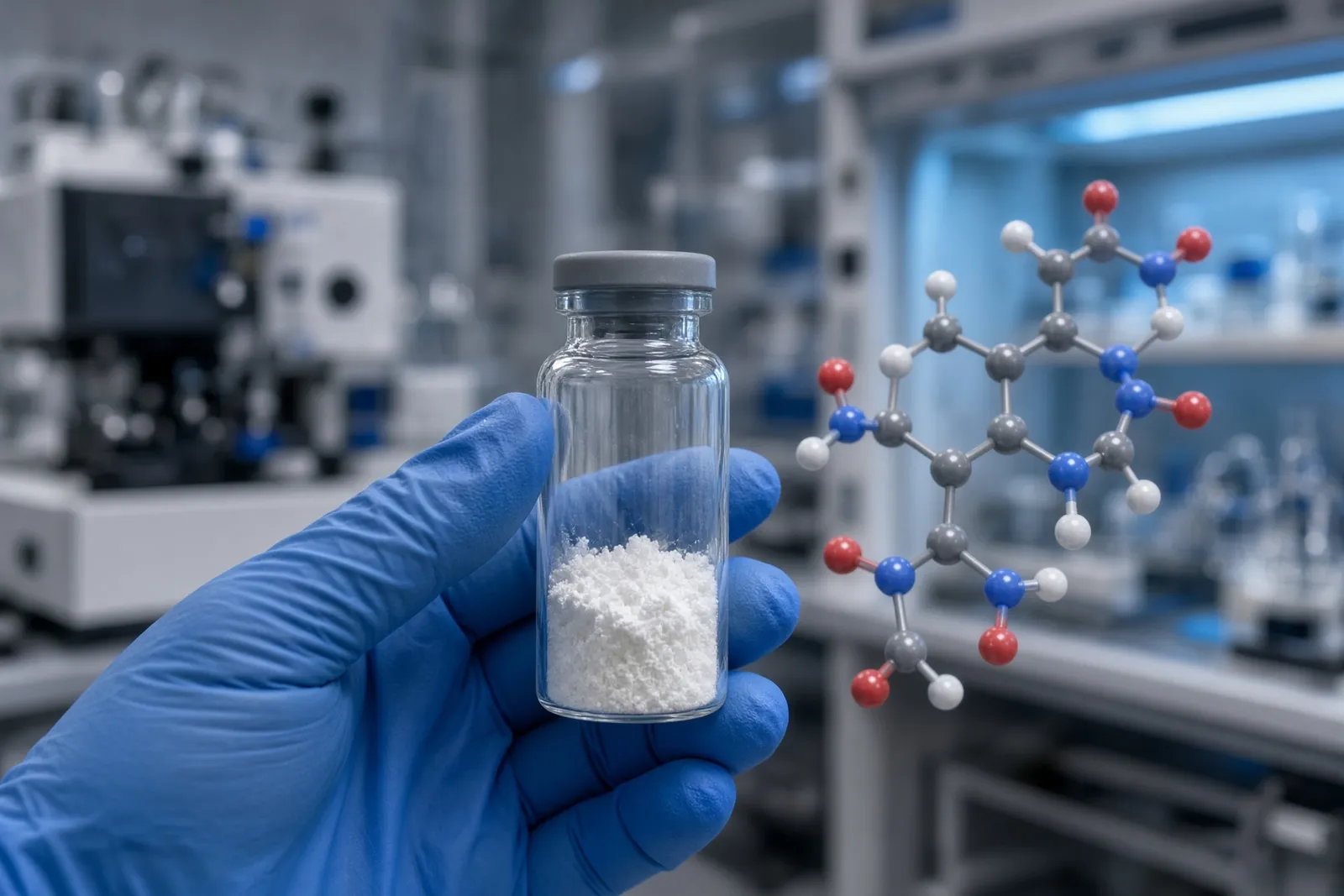
The word peptide now shows up on insulin pens, face creams, protein powders and social media feeds. That is a lot of ground for one word to cover, and it is the main reason the topic feels confusing.
This guide explains what peptides are, what they do in your body and how they differ from proteins. It also gives you a simple way to judge peptide claims, because products that share the same label do not share the same level of evidence.
Key Takeaways
- A peptide is a short chain of amino acids joined by peptide bonds. Most definitions place it between 2 and about 50 amino acids.
- Peptides and proteins use the same chemistry. The difference is size, shape and job.
- Most peptides work as messengers. They bind to receptors on cells and switch specific processes on or off.
- Natural peptides break down quickly, which is why most peptide medicines are injected or chemically modified.
- Evidence varies enormously. Insulin has a century of clinical use, while many peptides sold online have little or no human data.
What Are Peptides? (Meaning and Definition)
A peptide is a short chain of amino acids linked together by peptide bonds. Amino acids are the same building blocks that make up proteins. A peptide is simply a smaller chain, usually between 2 and about 50 amino acids long.[1]
Your body makes thousands of peptides. Scientists can also make them in a lab, which is why peptides appear in medicines, supplements and skincare.
Where the word "peptide" comes from
The German chemist Emil Fischer is credited with coining the term in the early 1900s and is often called the founding father of peptide chemistry.[2] The word comes from the Greek peptós, meaning "digested." It shares a root with pepsin, the stomach enzyme that breaks proteins into smaller pieces.
How a peptide bond forms
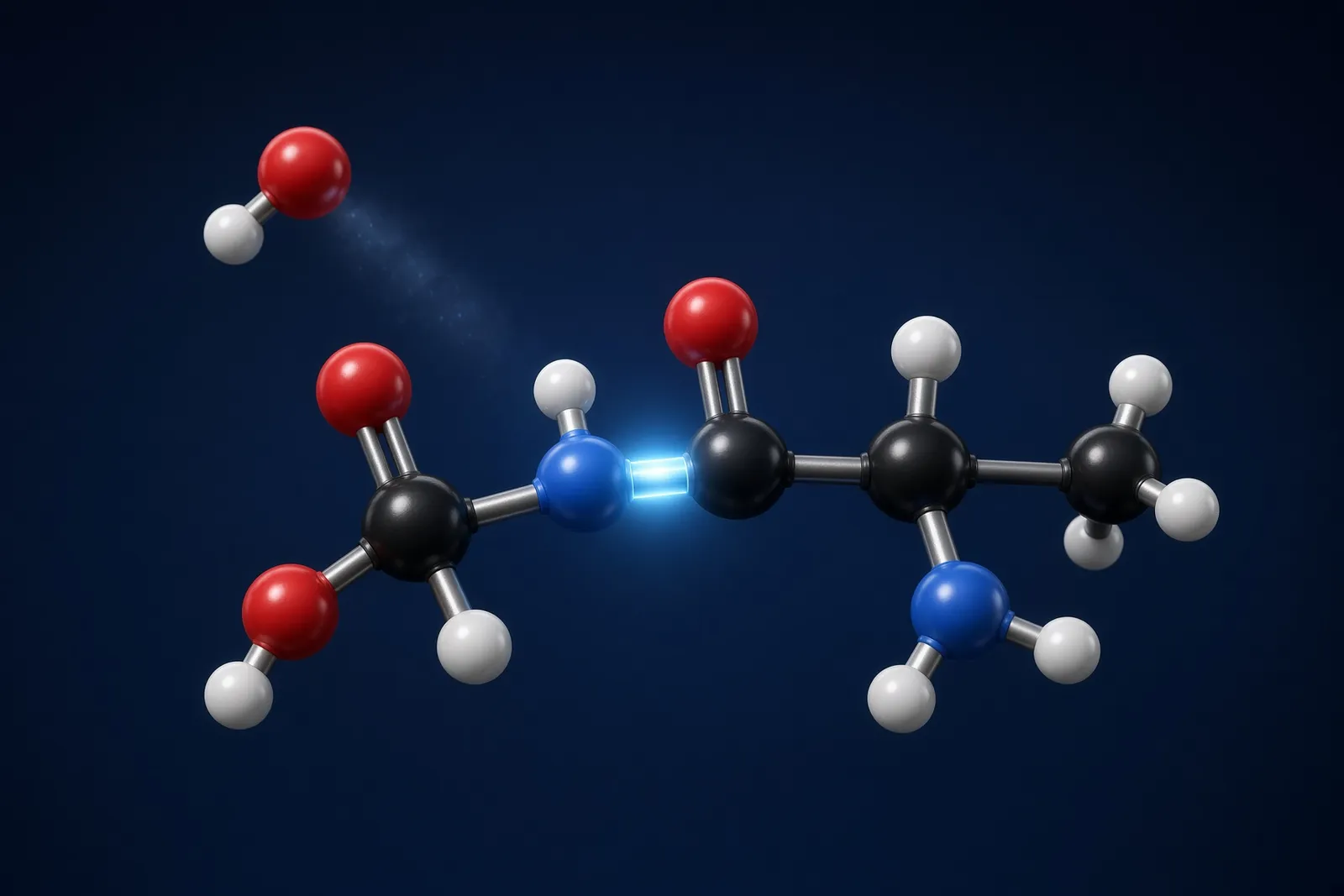
Every amino acid has an amino group at one end and a carboxyl group at the other. When the carboxyl group of one amino acid reacts with the amino group of the next, the two join and release one molecule of water.[3] That new link is the peptide bond.
Repeat this step and the chain grows. The order of amino acids in the chain, called the sequence, decides what the peptide does.
Names based on length
- Dipeptide: 2 amino acids.
- Tripeptide: 3 amino acids.
- Oligopeptide: a short chain, usually fewer than about 20 amino acids.[3]
- Polypeptide: a longer, unbranched chain. Very long polypeptides that fold into a working shape are called proteins.
Why sources give different numbers
If you read several definitions, you will see different cutoffs. Britannica describes peptides as traditionally 2 to 50 amino acids.[1] Some health sites say up to 100. Another common rule uses weight instead of length and calls chains of 10,000 daltons or more proteins.[3]
These numbers disagree because the line is a convention, not a law of nature. Insulin shows the problem well. It has 51 amino acids, just over the usual cutoff, yet it is widely described as a peptide hormone. The practical takeaway is simple: size is a spectrum, and the label matters less than how the molecule behaves.
Peptides vs Proteins: What Is Actually Different?
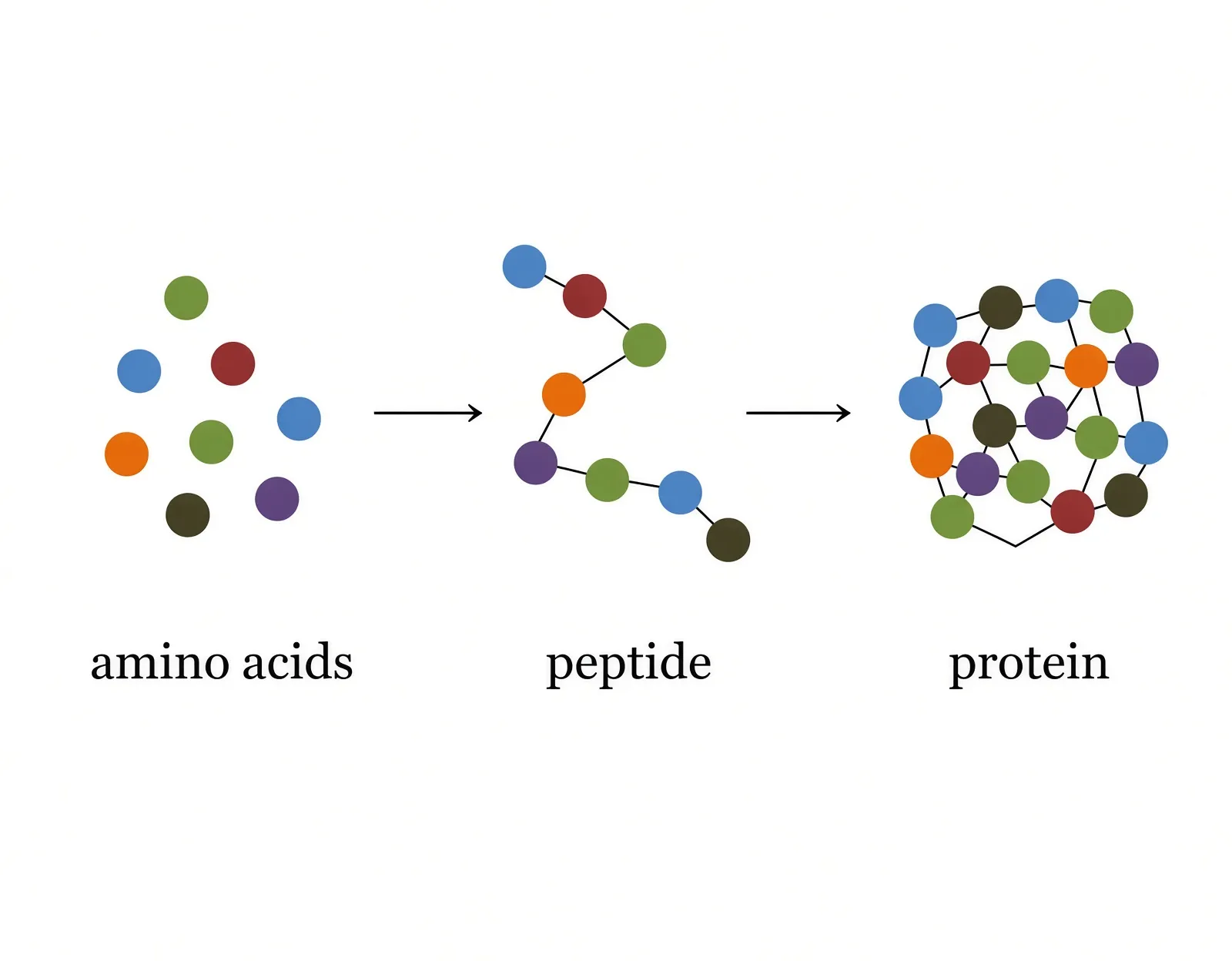
Peptides and proteins share the same chemistry. Both are chains of amino acids held together by peptide bonds, also called amide bonds.[1] The differences come from size, and size changes almost everything else.
Proteins are long enough to fold into complex three dimensional shapes. Peptides are usually too short to do that, so their structure tends to be simpler and more flexible.[1]
| Feature | Peptides | Proteins |
|---|---|---|
| Length | Usually 2 to about 50 amino acids | Usually more than 50 amino acids, sometimes tens of thousands |
| Shape | Simple and often flexible | Folded into complex 3D structures |
| Typical job | Messenger or signal | Enzyme, structure, transport or defense |
| Lifespan in the body | Often minutes | Varies widely, from minutes to weeks |
| How it is made for medicine or research | Usually built by chemical synthesis | Usually produced inside living cells |
| Examples | Oxytocin (9 amino acids), GLP-1, endorphins | Hemoglobin, collagen, antibodies |
The production row deserves attention. Because peptides are short, chemists can build them step by step. Proteins are generally too long for that, so they are usually made in yeast or mammalian cells.[4]
A useful way to remember the difference: a peptide is like a text message that tells a cell what to do. A protein is more like the machine that does the work.
What Do Peptides Do in the Body?
Most peptides act as chemical messengers. They help cells communicate and regulate processes such as growth, metabolism, healing and hormone activity.[5] Reviews of peptide science estimate that more than 7,000 naturally occurring peptides have been identified.[6]
How peptide signaling works
A peptide travels to a target cell and binds to a receptor on its surface. The fit is specific, much like a key in a lock. Once bound, the receptor triggers a chain of events inside the cell that switches a process on or off.
This specificity is the main reason peptides interest researchers. A peptide can act on one receptor type and leave most others alone.
Peptides as hormones
Many hormones are peptides. Insulin and glucagon control blood sugar. Ghrelin and leptin help regulate hunger and fullness.[7] Oxytocin plays a role in childbirth and social bonding.
Peptides in the brain and nerves
Neuropeptides carry signals between nerve cells. Endorphins are a well known example. They bind to opioid receptors and help the body manage pain and stress.
Peptides as natural defenders
Your skin and other tissues make antimicrobial peptides that help fight bacteria. Microbes use peptides too. Some bacteria produce peptides such as bacteriocins to kill competing microbes.[3]
Peptides from food
When you digest protein, enzymes break it into peptides and amino acids. Researchers are studying whether some of these food derived peptides offer benefits beyond basic nutrition.[5]
Why Size Matters: The Science Behind How Peptides Behave
Knowing that peptides are short is only half the story. Their small size explains why they are fragile, why most peptide drugs are injected and why chemists can build them in a lab.
Natural peptides break down fast
Peptide signals are meant to be brief. Enzymes called peptidases cut peptide bonds and clear the message quickly.
GLP-1 is a clear example. This gut hormone helps release insulin after a meal. In the bloodstream it lasts only one to two minutes before the enzyme DPP-4 breaks it down and the kidneys clear it.[8]
Drug developers solved this by changing the molecule. Semaglutide is a modified version of GLP-1 that binds to albumin, a blood protein that shields it from breakdown. As a result it lasts about a week, which is why the approved medicine is given once weekly.[9]
Most peptide medicines are injected
The digestive system is built to break down proteins and peptides. That is great for nutrition but a problem for medicine. Around 90% of peptide drugs must be injected because the gut breaks them down rapidly when they are swallowed.[10]
Peptides can be built from scratch
Because they are short, peptides can be assembled one amino acid at a time. Before modern methods this was slow. Making a five amino acid peptide once took the chemist Bruce Merrifield 11 months, with a yield of only 7%.[11]
Merrifield then invented solid phase peptide synthesis, which anchors the growing chain to a solid support. The method won him the 1984 Nobel Prize in Chemistry and is still the basis of most peptide production today.[12]
Peptides sit in a useful middle ground
Peptide drugs are larger than typical small molecule pills such as aspirin, yet much smaller than antibodies.[10] This middle size lets them bind receptors precisely while staying simple enough to make by chemistry.
What Are Peptides Used For?
Peptides are used in four main areas. The strength of the evidence is very different in each one.
1. Medicine
This is where peptides have the strongest track record. Insulin was first used to treat a child with diabetes in the early 1920s, and it proved that a natural peptide could treat human disease.[13]
Since then, more than 80 peptide drugs have reached the market. They treat conditions including diabetes, cancer, osteoporosis, multiple sclerosis, HIV infection and chronic pain.[14] About twice as many are in clinical development.[10]
New approvals continue. In 2025, the peptide elamipretide became the first treatment approved specifically for Barth syndrome, a rare genetic disease.[15] The GLP-1 medicines used for type 2 diabetes and weight management are also peptides.
2. Skincare
Peptides are common in antiaging creams and serums. Skincare peptides usually fall into four groups: signal peptides, carrier peptides, neurotransmitter peptides and enzyme inhibitor peptides.[16] Well known examples include the copper peptide GHK-Cu, a carrier peptide, and acetyl hexapeptide, a neurotransmitter peptide sold under the name Argireline.
Dermatologists describe the data for select topical peptides as promising, though results depend on the specific peptide, its concentration and the formula.[17]
3. Nutrition and supplements
Collagen peptides, also called hydrolyzed collagen, are the best known peptide supplement. A 2023 meta analysis of 26 randomized controlled trials with 1,721 participants found that they improved skin hydration and elasticity compared with placebo.[18]
The evidence has limits. A more recent review found that oral collagen did not show robust evidence for reducing wrinkles or increasing dermal density.[19]
4. Research
Scientists use synthetic peptides as tools. They help study how receptors work, generate antibodies and screen new drug candidates.
Many peptides sold online are labeled "for research use only." That label means the product is not an approved medicine and has not been evaluated for human use. Our research peptides directory shows which of these compounds vendors list, together with what published research says about each one.
Types of Peptides
There is no single official classification. The clearest approach is to sort peptides in three ways: by origin, by length and by function.
By origin
- Endogenous peptides are made by your own body, such as insulin, endorphins and oxytocin.[7]
- Exogenous peptides come from outside the body, such as food, cosmetics or medicines.
- Synthetic peptides are made in a lab. Some copy natural peptides exactly. Others are modified to last longer or bind more strongly.
By length
- Dipeptides and tripeptides
- Oligopeptides
- Polypeptides
By function
- Hormone peptides regulate metabolism, growth and reproduction.
- Neuropeptides carry signals in the nervous system.
- Antimicrobial peptides help defend against bacteria and fungi.
- Cosmetic peptides are used in skincare products.
- Bioactive food peptides are released when food proteins are digested.
How Peptides Are Made and What Quality Labels Mean
If you compare peptide products, you will see terms like purity, HPLC and mass spectrometry. Understanding them helps you judge what a listing actually tells you.
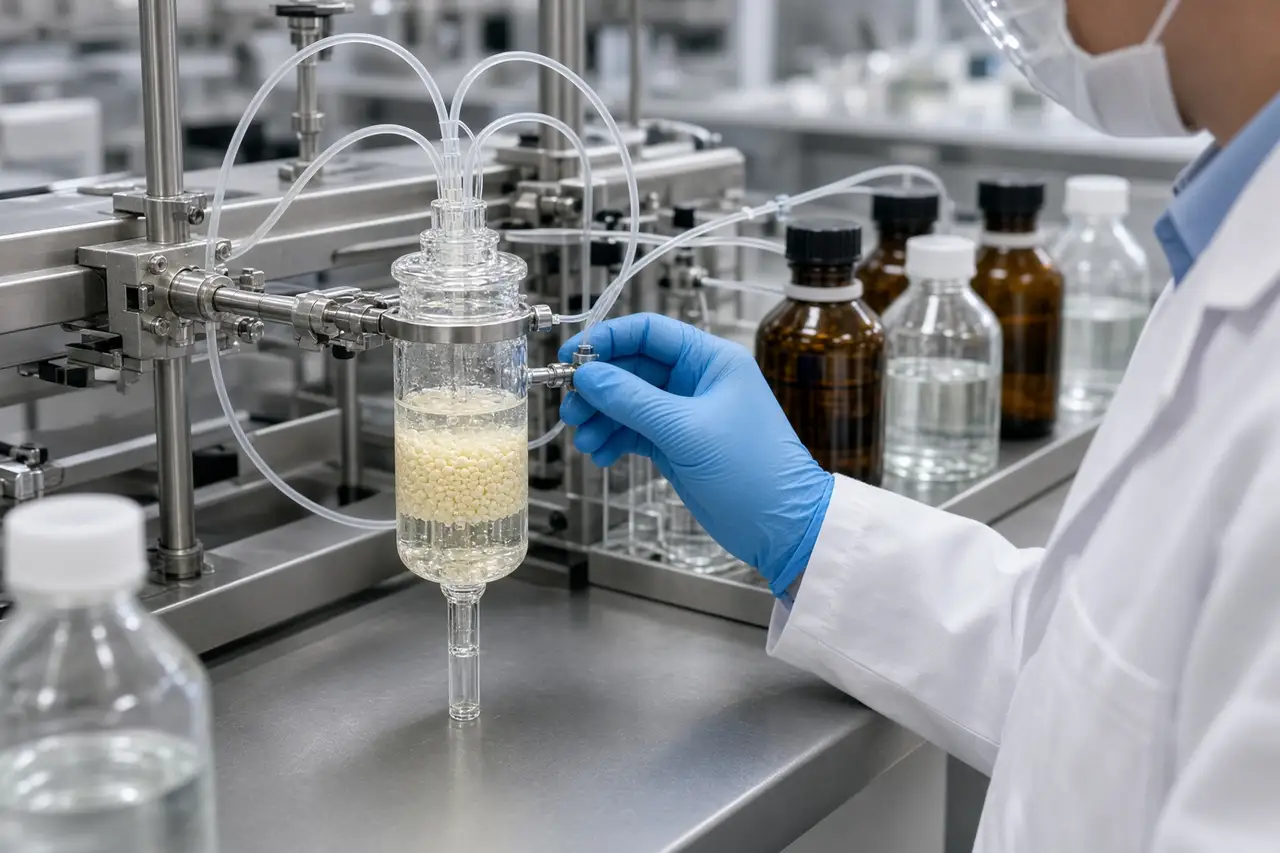
Solid phase peptide synthesis in five steps
- Anchor. The first amino acid is attached to a tiny resin bead.
- Add. The next amino acid is added. A temporary chemical cap stops it from reacting in the wrong place.
- Wash. Leftover chemicals are washed away while the chain stays on the bead.
- Repeat. The add and wash cycle repeats until the full sequence is built.
- Release and purify. The finished peptide is cut from the bead and purified.
What the quality terms mean
- Purity (%) tells you how much of the sample is the intended peptide. It is usually measured by HPLC.
- HPLC (high performance liquid chromatography) separates the target peptide from impurities, such as shorter or incomplete chains.
- Mass spectrometry (MS) checks that the molecule has the correct mass, which confirms its identity.
- Certificate of analysis (COA) is the document that reports these test results for a specific batch.
Professional synthesis services typically check quality with both MS and HPLC and offer purity grades from crude up to above 98%.[20] HPLC alone shows purity. MS alone shows identity. A complete test report includes both.
When you compare listings, check the purity figure, the test methods named and the amount per vial. These details are what make two products truly equivalent. On SN Peptide, each brand page summarizes what the vendor publishes about testing, so you can compare research peptide vendors like with like.
Science vs Hype: How to Read a Peptide Claim
"Peptide" is a chemical category, not a guarantee. Insulin and an untested online product are both peptides, but they sit at opposite ends of the evidence scale. Harvard Health points out that health claims for peptides promoted online have generally not been vetted by the FDA or any expert body.[21]
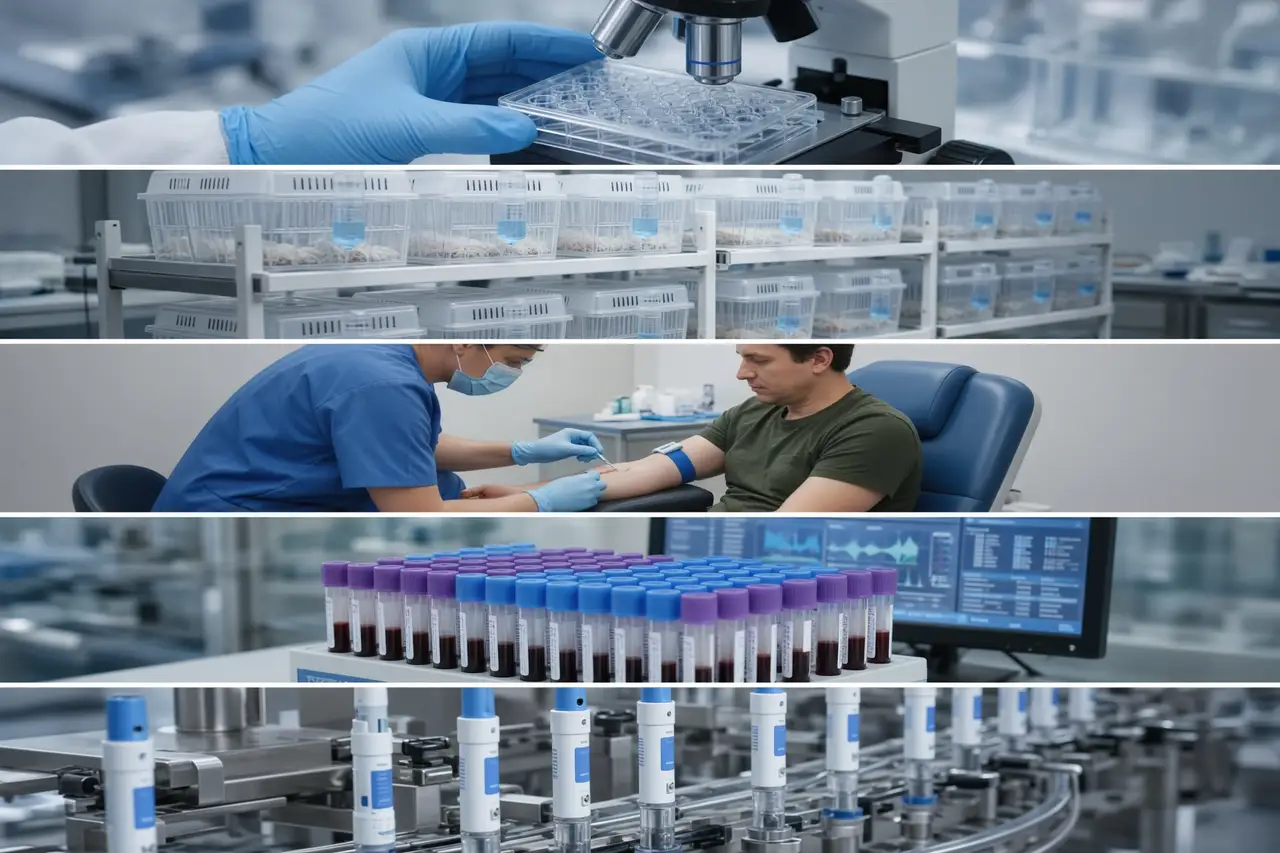
The five levels of evidence
- Lab dish studies. The peptide shows an effect on cells. This is a starting point only.
- Animal studies. The effect appears in mice or rats. Many results do not carry over to humans.
- Small human studies. A few dozen people show a signal. Results are early and often unconfirmed.
- Large randomized controlled trials. Hundreds or thousands of people, compared with placebo. This is strong evidence.
- Regulatory approval. A body such as the FDA has reviewed safety, effectiveness and manufacturing quality.
Where regulation stands in 2026
Rules for peptides are changing. In April 2026, the FDA said it would remove 12 peptides from Category 2, the list of bulk substances it had flagged as raising significant safety concerns for compounding.[22] It also scheduled advisory committee meetings to review them.
In late July 2026, an FDA advisory panel recommended loosening restrictions on access to four peptides.[17] These recommendations are advisory, and the FDA keeps the final decision.[22] Removal from a risk list is also not the same as approval as a medicine.
Four questions to ask about any peptide claim
- Which specific peptide is it? "Peptides" as a group have no single effect.
- What level of evidence supports the claim: lab, animal or human trials?
- Was the study done in the same form the product uses, such as a cream, a pill or an injection?
- Does the product come with batch test results for purity and identity?
The Bottom Line
Peptides are short chains of amino acids that your body uses mainly as messengers. They share their chemistry with proteins but differ in size, shape and job.
Their small size makes them precise and easy to build, but also fragile. That is why peptide medicines are often injected or modified to last longer.
Most importantly, the word peptide tells you what a molecule is, not whether it works. Always look at the specific peptide, the level of evidence and the quality testing behind it. When you are ready to compare peptide vendors, prices and coupons in one place, SN Peptide lists them side by side.
Frequently Asked Questions
Are peptides the same as proteins?
No. Both are chains of amino acids joined by peptide bonds, but peptides are shorter, usually 2 to about 50 amino acids, and they rarely fold into the complex shapes that proteins form. Most peptides act as signals, while most proteins act as enzymes, structures or transporters.
What is the difference between peptides and amino acids?
An amino acid is a single building block. A peptide is two or more amino acids linked together by peptide bonds.
Are peptides steroids?
No. Steroids are built on a ring structure made from cholesterol. Peptides are chains of amino acids. They are different chemical families that work through different receptors.
Do foods contain peptides?
Yes. When you digest protein from foods such as milk, eggs, meat and fish, your body breaks it into peptides and amino acids. Some food derived peptides are being studied for effects beyond basic nutrition.
Can peptides be taken by mouth?
Some can, such as collagen peptides used as a food supplement. Most peptide medicines, however, are injected because digestive enzymes break peptide bonds before the peptide can reach the bloodstream intact.
Are all peptides regulated the same way?
No. Approved peptide drugs are regulated as medicines, collagen peptides are sold as supplements, cosmetic peptides fall under cosmetic rules, and peptides sold for research use only are not approved for human use.
References
- Encyclopaedia Britannica. What is the difference between a peptide and a protein? britannica.com
- Emil Fischer, the founding father of peptide chemistry. Resonance (Springer). link.springer.com
- Peptide. Wikipedia.
- Institute for Molecular Bioscience, The University of Queensland. Explainer: Peptides vs proteins, what is the difference? imb.uq.edu.au
- University of Colorado Anschutz. Peptides explained: what they do, how they work and what to know about peptide therapy. news.cuanschutz.edu
- Fosgerau K, Hoffmann T. Peptide therapeutics: current status and future directions. Drug Discovery Today. 2015;20(1):122. doi.org
- Hawaii Pacific Health. Peptides: what they are, benefits, risks, and natural alternatives. 2026.
- GLP-1 physiology and the half life of native GLP-1. PubMed Central. pmc.ncbi.nlm.nih.gov
- Knudsen LB, Lau J. The discovery and development of liraglutide and semaglutide. Frontiers in Endocrinology. 2019;10:155. doi.org
- University of Vienna. The therapeutic potential of peptides. Press release, 2021. medienportal.univie.ac.at
- The Rockefeller University. Robert Bruce Merrifield, 1984 Prize in Chemistry. selections.rockefeller.edu
- The Nobel Prize in Chemistry 1984. Press release. nobelprize.org
- Peptidomimetic therapeutics review. PubMed Central. pmc.ncbi.nlm.nih.gov
- Muttenthaler M, King GF, Adams DJ, Alewood PF. Trends in peptide drug discovery. Nature Reviews Drug Discovery. 2021;20:309. doi.org
- AlShaer D, Al Musaimi O, Albericio F, de la Torre BG. 2025 FDA TIDES (peptides and oligonucleotides) harvest. Pharmaceuticals. 2026;19(2):244. mdpi.com
- UChicago Medicine AdventHealth. What are peptides in skin care?
- Brown University Health. Peptides: what they are, what they do, and what you need to know.
- Effects of oral collagen for skin anti aging: a systematic review and meta analysis. Nutrients. 2023;15(9):2080. doi.org
- Dermatology Times. Oral collagen improves skin hydration and elasticity, but benefits for wrinkles remain unproven.
- Thermo Fisher Scientific. Custom peptide synthesis services.
- Harvard Health Publishing. Peptides: what they are, potential benefits, and safety concerns. 2026. health.harvard.edu
- Orrick. FDA announces removal of 12 peptides from Category 2 and schedules PCAC meetings. April 2026.

Jason White
Founder and web developer
Jason White is a web developer who enjoys affiliate marketing, hunting for good deals and building web products that are genuinely useful. He created SN Peptide to put peptide vendors, prices, coupon codes and research information in one clear place, so people can compare their options quickly instead of opening dozens of shop pages.
Jason is not a doctor or a scientist. For that reason, the research summaries on SN Peptide are built on cited, peer-reviewed sources and never include medical advice or instructions for use.