Scientific Education
Are Peptides Steroids? Peptides vs Steroids Explained
By Jason White · Published
Quick Answer
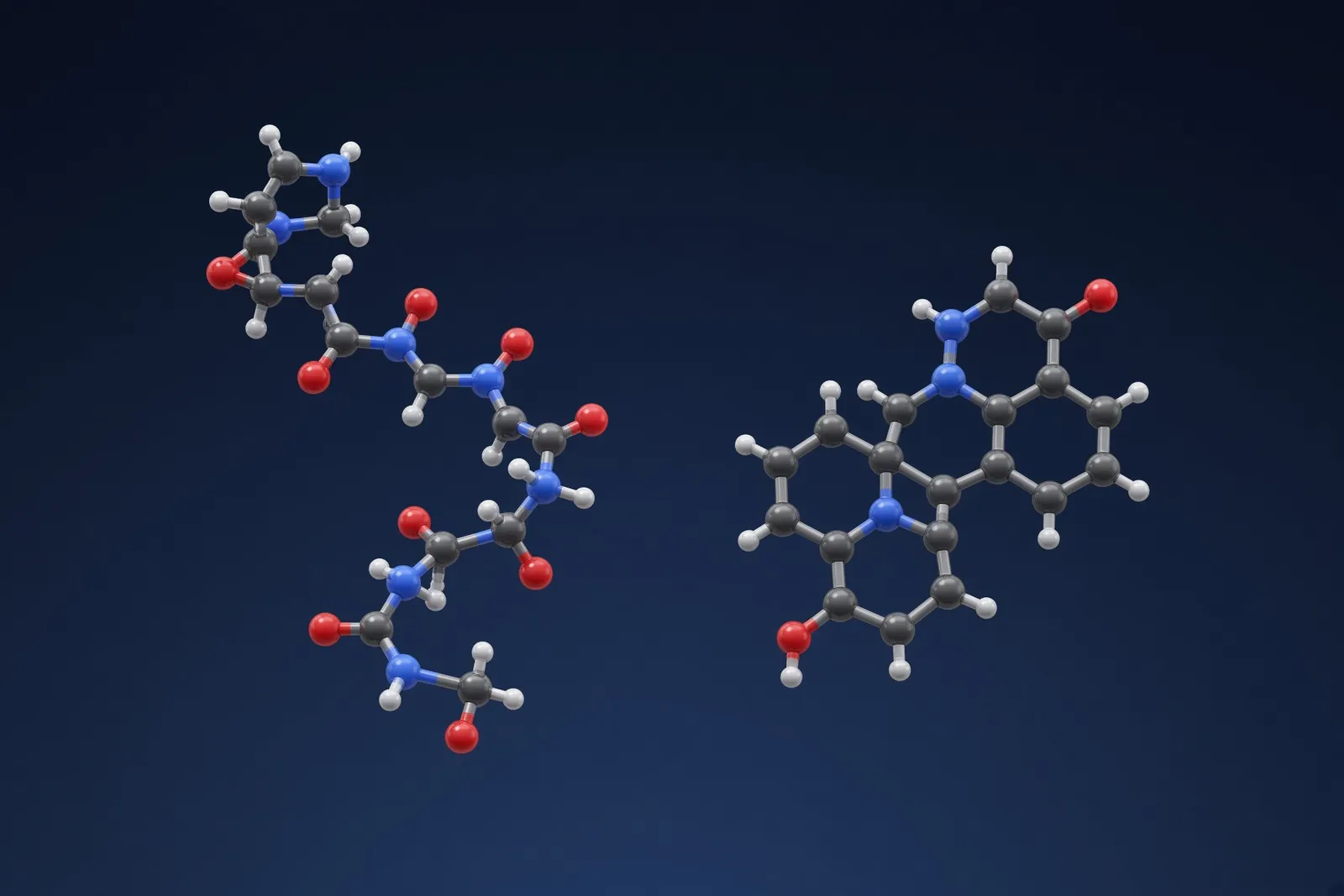
No, peptides are not steroids. Peptides are short chains of amino acids. Steroids are fat soluble molecules built on a four ring carbon backbone made from cholesterol. They differ in structure, in how they act on cells and in how the law treats them. But "not a steroid" does not mean "no risk."
Peptides are now promoted in many gyms and social feeds as the "new alternative to steroids." That framing makes people assume the two are related, or that one is simply a safer version of the other.
This guide explains what actually separates peptides from steroids, where the line gets blurry and why claims that peptides are "safer" are not backed by good data. If you are new to the topic, start with our guide to what peptides are and how they differ from proteins.
Are Peptides Steroids? The Short Answer
No. Peptides are short chains of amino acids, while anabolic steroids are usually synthetic versions of natural male hormones such as testosterone.[1]
The two belong to different chemical families. A peptide is built like a string of beads. A steroid is a compact block of fused rings. Nothing about one can turn it into the other.
What Are Steroids? Two Very Different Drug Families
The steroid molecule
Every steroid shares the same core shape: four carbon rings fused together. All steroid hormones in the body are made from cholesterol.[2] Testosterone, estrogen and cortisol are all steroid hormones.
Anabolic androgenic steroids (AAS)
When people at the gym say "steroids," they usually mean this group. The DEA describes anabolic steroids as drugs with a basic steroid ring structure that produce anabolic (muscle building) and androgenic (masculinizing) effects.[3]
Corticosteroids
Doctors also prescribe corticosteroids such as prednisone to calm inflammation and treat conditions like asthma. These are steroids too, but they do not build muscle. US law treats them separately: the legal definition of "anabolic steroid" excludes estrogens, progestins, corticosteroids and DHEA.[4]
So when someone says "steroid," it is worth asking which kind they mean.
What Are Peptides?
Peptides are short chains of amino acids joined by peptide bonds. Most act as messengers that tell cells to start or stop a process.
Your body makes many peptide hormones. Insulin controls blood sugar, and growth hormone helps regulate growth and metabolism. Peptides are also made in laboratories for medicines and research. Our full guide to peptides explains the science in more detail.
Peptides vs Steroids: Key Differences
Biology textbooks sort hormones into two main families: peptide hormones and steroid hormones. They behave in opposite ways.[5]
| Feature | Peptides | Steroids |
|---|---|---|
| Building blocks | Chains of amino acids | Four fused carbon rings made from cholesterol |
| Solubility | Water soluble | Fat soluble |
| Where the receptor is | On the surface of the cell | Inside the cell or its nucleus |
| How the signal works | Triggers messenger pathways inside the cell | Directly switches genes on or off |
| How long natural forms last | Usually minutes | Usually hours |
| Examples | Insulin, growth hormone, oxytocin | Testosterone, cortisol, estrogen |
| US controlled substance? | Commonly discussed peptides are not scheduled | Anabolic steroids are Schedule III |
| Allowed in sport? | Many are prohibited | Anabolic steroids are prohibited |
A simple pair to remember: cortisol is a steroid, insulin is a peptide.[6]
How They Work: Ringing the Doorbell vs Walking Inside
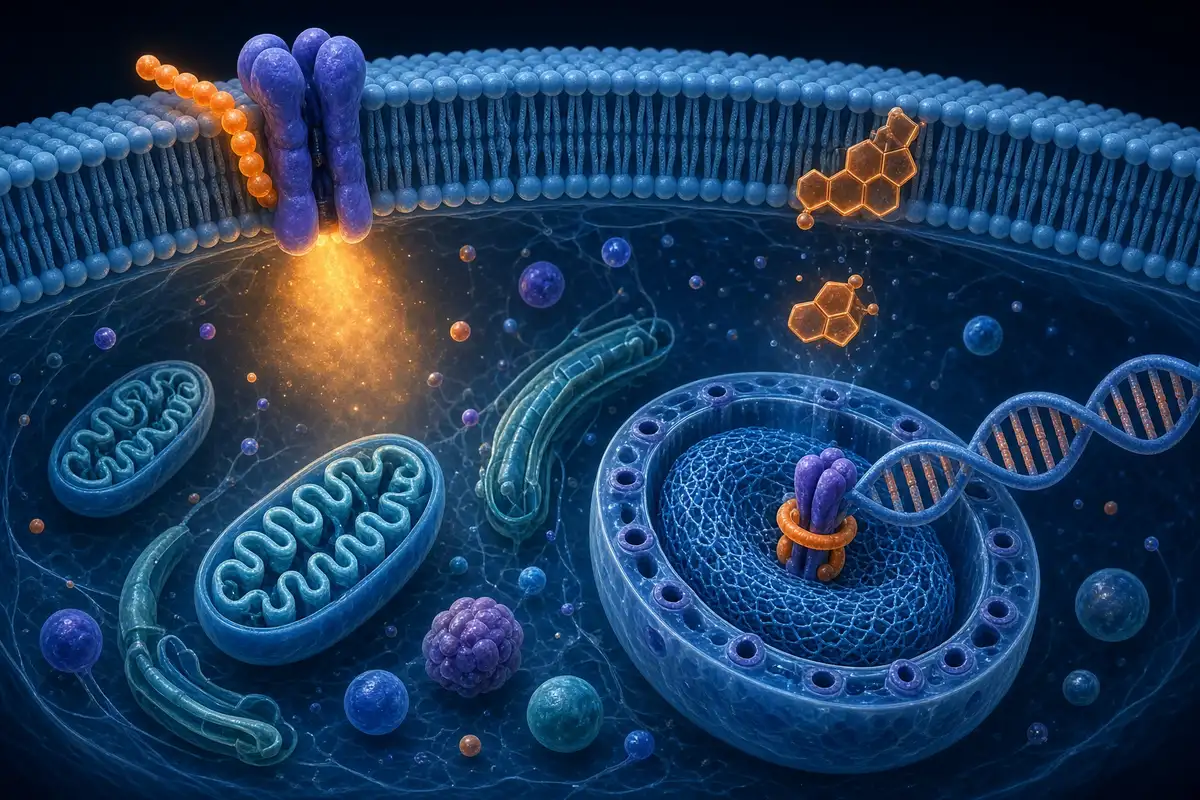
Peptides ring the doorbell
Most peptide hormones are water soluble, so they cannot pass through the fatty outer membrane of a cell. Instead, they bind to receptors on the cell surface and trigger messenger pathways inside.[7]
Steroids walk inside
Steroids are fat soluble. They pass straight through the cell membrane and bind to receptors in the cytoplasm or nucleus.[7] The hormone and receptor then act directly on DNA, changing which genes are switched on.
This difference explains a lot. Peptide signals tend to be fast and short lived. Steroid effects build more slowly and can reshape tissue over time, which is why anabolic steroids can add muscle so strongly.
Where the Line Gets Blurry
Peptides and steroids are chemically separate. In the body and in the gym, though, they overlap in three important ways.
1. Some peptides tell your body to make more steroids
Testosterone production is controlled by a chain of peptide signals. The brain releases gonadotropin releasing hormone (GnRH), which tells the pituitary gland to release luteinizing hormone (LH), which tells the testes to make testosterone.
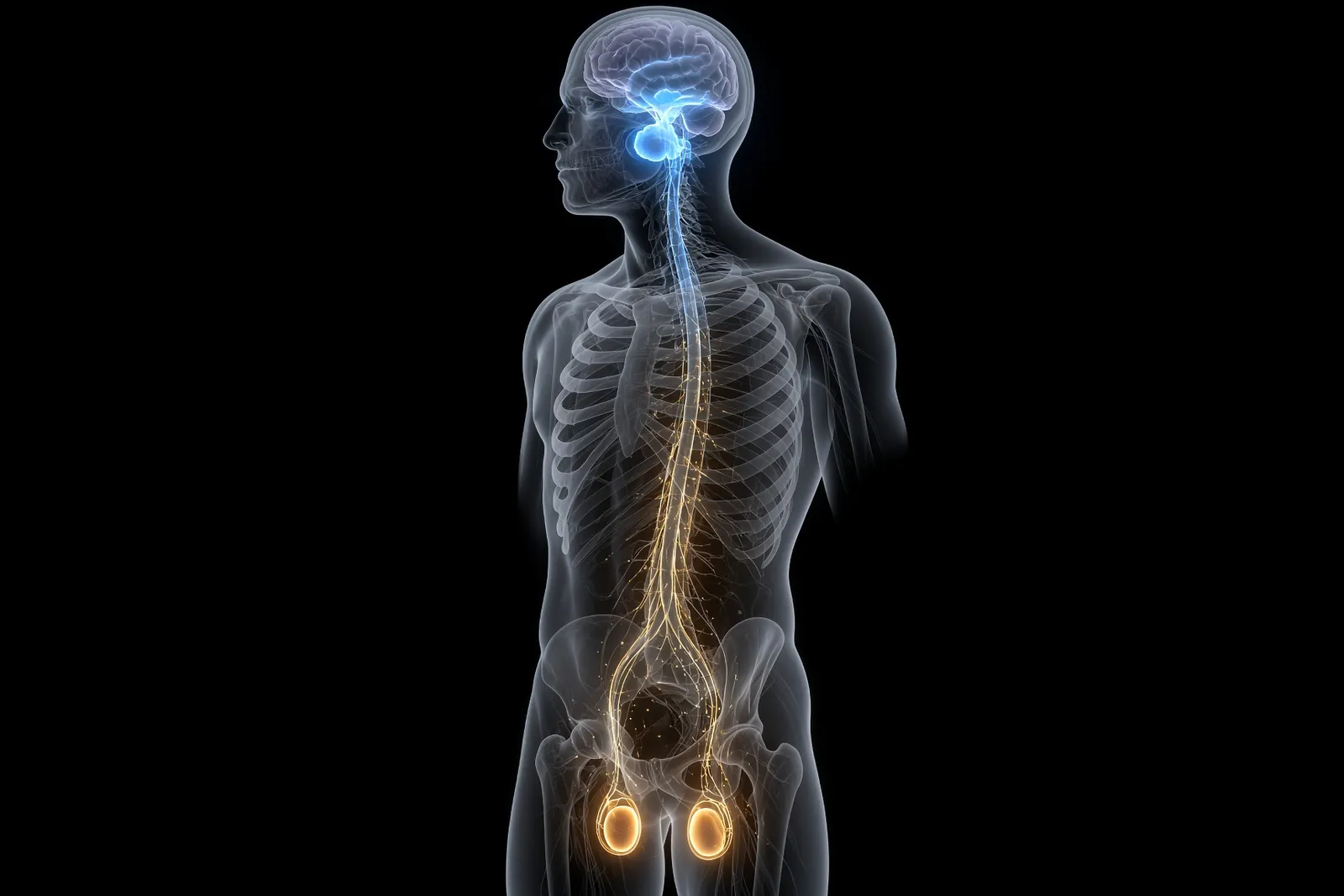
This is why the World Anti-Doping Agency (WADA) has a category called "testosterone stimulating peptides in males." It includes chorionic gonadotrophin, luteinizing hormone and gonadorelin, a synthetic form of GnRH.[8] A peptide that is not a steroid can still raise steroid levels.
2. Growth hormone is a peptide and a classic performance drug
Growth hormone is a peptide hormone, not a steroid. Yet the Endocrine Society lists it among the most widely misused performance enhancing drugs. In its review, anabolic steroids were the most common, followed by human growth hormone, IGF-1 and insulin.[9] Three of those four are peptide or protein hormones.
3. The "gym gray zone" mixes up different compounds
Online and in gyms, several unrelated substances are often lumped together as "peptides." The table below sorts them out.
| Compound | Chemical class | WADA category |
|---|---|---|
| Testosterone, nandrolone | Anabolic steroid | S1 Anabolic agents |
| Ostarine, ligandrol (SARMs) | Small synthetic molecule | S1 Anabolic agents |
| MK-677 (ibutamoren) | Small molecule that mimics ghrelin | S2 Growth hormone secretagogues |
| Ipamorelin, CJC-1295 | Peptide | S2 Growth hormone releasing factors |
| Growth hormone, IGF-1 | Peptide or protein hormone | S2 Peptide hormones and growth factors |
| BPC-157 | Peptide | S0 Non approved substances |
SARMs are listed by WADA alongside anabolic steroids as anabolic agents.[8] MK-677 is often called a peptide, but it is a small molecule that mimics the hunger hormone ghrelin.[10] Knowing the real class matters, because the risks and the rules differ.
Are Peptides Safer Than Steroids? What the Evidence Says
This is the question behind most searches. The honest answer is that nobody can say for sure.
Steroid risks are well documented
The Endocrine Society warns that the health effects of performance enhancing drugs are greatly underappreciated. It also notes that most users are not athletes but recreational weightlifters.[11] One of its authors summed it up: there is a widespread misperception that these drugs are safe or that their side effects are manageable.[12]
For most peptides, we simply do not know
Pharmacists reviewing the evidence put it plainly: we do not know if peptides are safer than steroids, because there is not enough research comparing them.[13] Most peptides promoted for muscle growth are not approved medicines. They are largely experimental substances.[13]
"Not a steroid" does not mean "no hormonal effect"
Some peptides raise hormones linked to muscle growth. But higher hormone levels do not always lead to more muscle, and the long term effects of pushing those hormones are poorly studied.[13]
Product quality is a separate risk
Peptides sold outside regulated channels may not contain what the label says. When Australia's medicines regulator tested one product labeled as BPC-157 and TB-500, it found no TB-500 at all.[14] That is why published test results matter. On SN Peptide, we collect the purity and testing information vendors publish so you can compare peptide vendors and their listings side by side.
Legal Status: Peptides vs Steroids
Anabolic steroids are controlled substances
Through the Anabolic Steroid Control Acts of 1990 and 2004, Congress placed 59 anabolic steroids in Schedule III of the Controlled Substances Act.[3] A 2014 law added 22 more specific substances and created a faster way to control new designer steroids.[4]
Peptides are regulated as drugs, not controlled substances
Commonly discussed peptides such as BPC-157 and semaglutide are not on any DEA schedule.[15] The FDA regulates them as drugs instead. That does not make unapproved peptides legal to sell for human use. Our guide Are Peptides Legal? explains the rules, including what changed in 2026.
Drug Testing and Sport: Both Are Banned
For athletes, the difference between peptides and steroids barely matters. Both are banned.
- Anabolic steroids fall under S1 Anabolic agents on the WADA Prohibited List.[8]
- Peptide hormones and releasing factors fall under S2. Ipamorelin, for example, is listed as a growth hormone secretagogue and is prohibited both in and out of competition.[16]
- Experimental peptides such as BPC-157 fall under S0 Non approved substances.[17]
Peptides are not a new concern for testers. Peptide hormones were first added to the banned list in 1989, starting with chorionic gonadotropin, ACTH, erythropoietin and human growth hormone.[18]
The Bottom Line
Peptides are not steroids. One is a chain of amino acids that signals from outside the cell. The other is a ring shaped molecule from cholesterol that works inside the nucleus.
The chemistry is clear, but the practical picture is not as simple. Some peptides raise steroid hormone levels, growth hormone is a peptide that is widely misused, and there is no solid evidence that peptides are safer than steroids. In sport, both are banned.
If you research peptides, focus on the specific compound, the evidence behind it and the quality testing of the product. For side by side vendor information, SN Peptide lets you compare research peptide vendors, prices and coupons in one place.
Frequently Asked Questions
Is testosterone a peptide?
No. Testosterone is a steroid hormone. It is made from cholesterol and has the four ring structure that defines all steroids.
Is growth hormone a steroid?
No. Growth hormone is a peptide hormone, a chain of amino acids made by the pituitary gland. It is still a prohibited substance in sport and is one of the most commonly misused performance enhancing drugs.
Are SARMs peptides?
No. SARMs such as ostarine and ligandrol are small synthetic molecules designed to act on androgen receptors. The World Anti-Doping Agency lists them as anabolic agents, in the same class as anabolic steroids.
Is MK-677 a peptide?
No. MK-677, also called ibutamoren, is a small molecule that mimics the hunger hormone ghrelin. It is often grouped with peptides because it raises growth hormone, but chemically it is not a peptide.
Can peptides replace steroids for building muscle?
There is no good evidence that they can. Very few peptides have been studied for muscle growth in humans, and a rise in hormone levels does not always mean more muscle.
Do peptides show up on drug tests?
Many do. The World Anti-Doping Agency bans peptide hormones, growth hormone releasing peptides and unapproved experimental peptides, and doping control laboratories test for them.
Is insulin a steroid?
No. Insulin is a peptide hormone made of amino acids. It works by binding to receptors on the surface of cells, not by entering the nucleus like a steroid.
References
- Harvard Health Publishing. Peptides: what they are, potential benefits, and safety concerns. 2026. health.harvard.edu
- Morris J, et al. Biology: How Life Works. Chapter 38, Animal hormones. Macmillan Learning.
- U.S. Drug Enforcement Administration, Diversion Control Division. Anabolic steroids drug and chemical fact sheet. deadiversion.usdoj.gov
- Federal Register. Implementation of the Designer Anabolic Steroid Control Act of 2014. August 1, 2023. federalregister.gov
- Pearson. Endocrine physiology: hormones, cellular communication and case studies.
- Pearson. Cell signaling mechanisms and hormone action.
- Hillis D, et al. Life: The Science of Biology. Chapter 38, Hormones. Macmillan Learning.
- World Anti-Doping Agency. The 2025 Prohibited List, World Anti-Doping Code (Council of Europe copy). rm.coe.int
- EurekAlert. Endocrine Society scientific statement on the medical consequences of performance enhancing drugs.
- Ibutamoren. Wikipedia.
- Pope HG Jr, Wood RI, Rogol A, Nyberg F, Bowers L, Bhasin S. Adverse health consequences of performance enhancing drugs: an Endocrine Society scientific statement. Endocrine Reviews. 2014;35(3):341. pubmed.ncbi.nlm.nih.gov
- Partnership to End Addiction. Medical group warns of danger of performance enhancing drugs.
- GoodRx Health. Peptides for muscle growth. Reviewed by Stacia Woodcock, PharmD. September 16, 2026.
- Therapeutic Goods Administration. Laboratory testing of peptide products. tga.gov.au
- PeptideJournal. DEA classification of peptides: current status. 2026.
- Sport Integrity Australia. Ipamorelin. sportintegrity.gov.au
- USADA. BPC-157: what athletes should know about the prohibited experimental peptide. usada.org
- German Sport University Cologne. S2 Peptide hormones, growth factors, related substances and mimetics. dshs-koeln.de

Jason White
Founder and web developer
Jason White is a web developer who enjoys affiliate marketing, hunting for good deals and building web products that are genuinely useful. He created SN Peptide to put peptide vendors, prices, coupon codes and research information in one clear place, so people can compare their options quickly instead of opening dozens of shop pages.
Jason is not a doctor or a scientist. For that reason, the research summaries on SN Peptide are built on cited, peer-reviewed sources and never include medical advice or instructions for use.