AHK-Cu Peptide
Also known as Ala-His-Lys copper, L-alanyl-L-histidyl-L-lysine-Cu2+, Copper tripeptide AHK
AHK-Cu Peptide explained: what research says about benefits and side effects, plus prices from 9 vendors and current coupon codes.
- 9vendors
- $30.00lowest price (100 mg)
- 20% offbest code at Certified-Pep
For research and informational purposes only. Not medical advice. SN Peptide does not sell peptides.
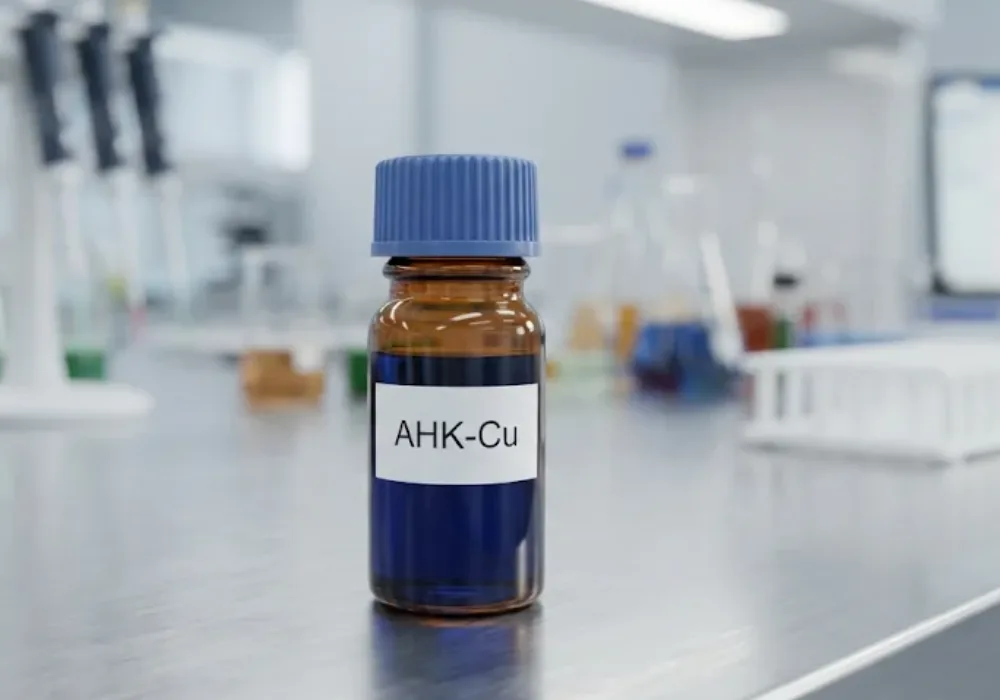
What Is the AHK-Cu Peptide?
AHK-Cu is a copper complex of the tripeptide alanine-histidine-lysine (Ala-His-Lys), written in full as L-alanyl-L-histidyl-L-lysine-Cu2+. It is a close relative of the much better known copper peptide GHK-Cu (glycine-histidine-lysine copper): the two differ only in their first amino acid, and both carry a bound copper ion.
Interest in copper tripeptides comes from their activity on skin cells. In laboratory work, copper tripeptide complexes stimulate the growth of dermal fibroblasts and raise their production of vascular endothelial growth factor (VEGF), a signal involved in blood vessel formation. For this reason, AHK-Cu is mostly discussed in connection with hair and skin.
The key study, and in fact the only peer-reviewed study of AHK-Cu that SN Peptide found, was published in 2007 in Archives of Pharmacal Research by a team of researchers in Seoul, South Korea. Working with human hair follicles kept alive outside the body and with cultured dermal papilla cells, the specialized cells at the base of the follicle, the researchers found that very low concentrations of AHK-Cu lengthened hair follicles and increased the proliferation of dermal papilla cells. In addition, markers of cell death in these cells decreased.
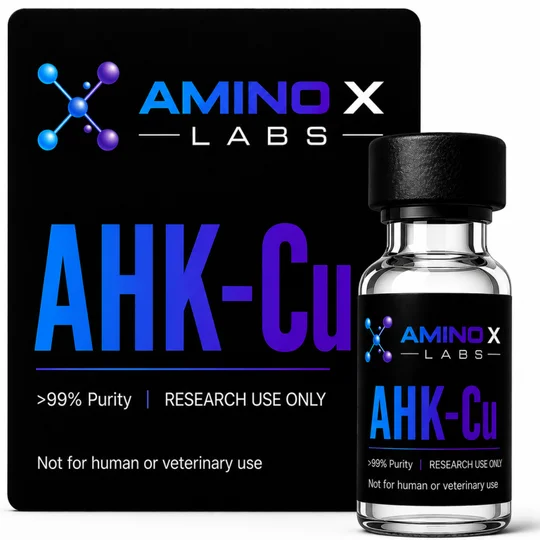
Beyond this, AHK-Cu has not been tested in published clinical trials, and it is not approved as a medicine. Consequently, its hair growth reputation rests on laboratory results only. Research vendors sell it as vials, as raw powder and, in some cases, as cosmetic ampules.
Best prices & deals
Where to Buy AHK-Cu Peptide Online
- $27.00
$30.00with code lenanguyen (10% off)$43.00Sale -30%USD · checked Nov 18, 2026Visit vendor(opens in a new tab)Code verified Nov 12, 2026 - $43.47
$48.30with code lenanguyen (10% off)USD · checked Nov 18, 2026Visit vendor(opens in a new tab)Code verified Nov 12, 2026 - $65.70
$73.00with code LENA (10% off)USD · checked Nov 20, 2026Visit vendor(opens in a new tab)Code verified Nov 12, 2026 - $74.00USD · checked Nov 18, 2026
- $35.00USD · checked Nov 18, 2026
- A$58.50
A$65.00with code earnestloris (10% off)AUD · checked Nov 18, 2026Visit vendor(opens in a new tab)Code verified Nov 16, 2026
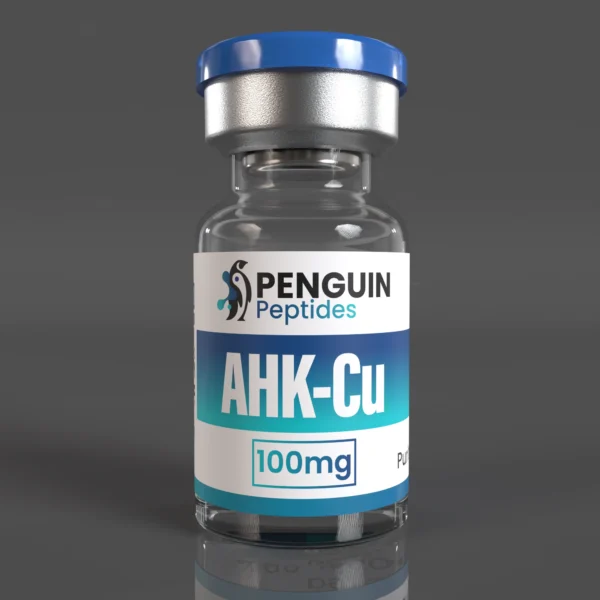
- $27.20
$32.00with code LENA (15% off)USD · checked Nov 19, 2026Visit vendor(opens in a new tab)Code verified Nov 12, 2026 - $46.00
$50.00Sale -8%USD · checked Nov 19, 2026
- $54.40
$68.00with code LENA (20% off)USD · checked Nov 18, 2026Visit vendor(opens in a new tab)Code verified Nov 12, 2026
- $195.00USD · checked Nov 18, 2026
AHK-Cu Benefits: What Research Shows
The points below summarize effects that have been studied in research. Each one shows the type of evidence behind it, because findings from animal or laboratory studies do not prove that the same effects occur in people.
- Hair follicle elongation: in the 2007 study, AHK-Cu stimulated the elongation of human hair follicles kept in culture outside the body.Preclinical
- Dermal papilla cells: AHK-Cu increased the proliferation of cultured human dermal papilla cells, which play a central role in hair follicle growth.Preclinical
- Anti-apoptotic signals: treated cells showed a higher Bcl-2/Bax ratio and lower levels of cleaved caspase-3 and PARP, although the drop in the number of dying cells was not statistically significant.Preclinical
- Hair growth in people: no published clinical trial has tested AHK-Cu for hair growth, so this effect is not established in humans.Limited human data
Evidence levels: Preclinical (animal or lab studies) · Clinical (human studies) · Limited human data.
AHK-Cu Peptide Side Effects and Safety
- No published human safety data: AHK-Cu has not been studied for safety in people, so its side effects are unknown.
- Laboratory concentrations only: the 2007 study used extremely low concentrations on isolated tissue and cells, which says nothing about safety in other settings.
- Copper content: AHK-Cu carries copper, so it is worth knowing that safety data on the related GHK-Cu do not automatically apply to it.
- Product quality: check each vendor's certificate of analysis (COA) for identity and copper peptide content. COAs are vendor-provided unless marked otherwise.
AHK-Cu Dosage: What Research Says
The single published AHK-Cu study measured effects on hair follicles and cells in a dish, at concentrations that cannot be translated into an amount for people.
SN Peptide therefore gives no doses, concentrations or instructions for use.
AHK-Cu Peptide FAQs
What is the difference between AHK-Cu and GHK-Cu?
Both are copper tripeptides. GHK-Cu starts with glycine, while AHK-Cu starts with alanine. GHK-Cu has a much larger body of research, whereas AHK-Cu has been studied mainly in one hair follicle study.
Does AHK-Cu help hair growth?
In a 2007 laboratory study, AHK-Cu lengthened human hair follicles kept in culture and increased dermal papilla cell growth. It has not been tested for hair growth in published clinical trials.
What are the known AHK-Cu side effects?
They are unknown, because no human safety study of AHK-Cu has been published.
Is AHK-Cu approved as a medicine?
No. AHK-Cu is not approved as a medicine and is sold as a research compound.
Where can I buy AHK-Cu online?
Several research peptide vendors list AHK-Cu, as vials, raw powder or cosmetic ampules. On this page, SN Peptide compares their prices for equivalent products (same amount, form and pack size), applies exclusive coupon codes where available and shows when each price was last checked.
References
Last reviewed Nov 21, 2026.
Related Peptides
GHK-Cu
Also known as Copper Peptide GHK-Cu, Copper Tripeptide-1, Glycyl-L-Histidyl-L-Lysine Copper
Acetyl Hexapeptide
Also known as Acetyl hexapeptide-8, Acetyl hexapeptide-3, Argireline, Ac-EEMQRR-NH2